You Won’t Believe What Lucknow’s Hidden Spots Can Do for Your Downtime
If you think Lucknow is just kebabs and history, think again. I went looking for relaxation and stumbled upon something far richer — a city that knows how to unwind in style. From peaceful garden escapes to buzzing cultural lounges, Lucknow’s leisure scene surprised me at every turn. It’s not just about sightseeing; it’s about feeling good. Let me take you through the spots where locals recharge, connect, and truly live. This is a city where downtime isn’t an afterthought — it’s woven into the rhythm of daily life. Whether you’re strolling under shaded avenues, sipping tea in a quiet corner, or watching the golden hour settle over centuries-old courtyards, Lucknow invites you to slow down and breathe deeply.
The Soul of Lucknow: More Than Monuments
Lucknow is often introduced through the lens of its grand past — the Nawabi era, the elegance of chikankari embroidery, and its legendary culinary heritage. While these elements remain central to the city’s identity, there’s a quieter, equally compelling narrative unfolding beneath the surface. Today, Lucknow is evolving into a destination that honors tradition while embracing the modern need for meaningful leisure. It’s a city where history doesn’t just live in museums and monuments but flows through the way people spend their free time — with intention, warmth, and a deep appreciation for unhurried moments.
What sets Lucknow apart is its cultural attitude toward relaxation. Unlike cities that equate leisure with luxury or entertainment, Lucknow’s approach is rooted in accessibility and human connection. Here, downtime isn’t reserved for the weekend or special occasions; it’s integrated into the everyday. Families gather in parks after work, friends meet for tea without an agenda, and artists sketch in quiet corners of public spaces. This natural rhythm reflects a mindset that values presence over productivity, conversation over consumption, and stillness over spectacle.
The city’s transformation into a leisure-friendly destination is not accidental. Urban planning, community engagement, and cultural preservation have all played a role in creating spaces where people can truly unwind. Parks are well-maintained and welcoming, pedestrian zones are expanding, and cultural institutions are increasingly designed with comfort in mind. The result is a city that doesn’t just offer things to do — it offers ways to be. For visitors, this means an opportunity to step into a different pace of life, one that prioritizes emotional well-being and social belonging.
This balance between heritage and modern comfort makes Lucknow uniquely suited for travelers seeking more than a checklist of sights. It’s a place where you can explore history in the morning and find peace in a garden bench by sunset. The city doesn’t demand your attention; it invites you to linger. And in doing so, it redefines what a meaningful travel experience can be — not through grand gestures, but through small, authentic moments of connection and calm.
Ambling Through Amrapali Garden: Nature with a Nawabi Touch
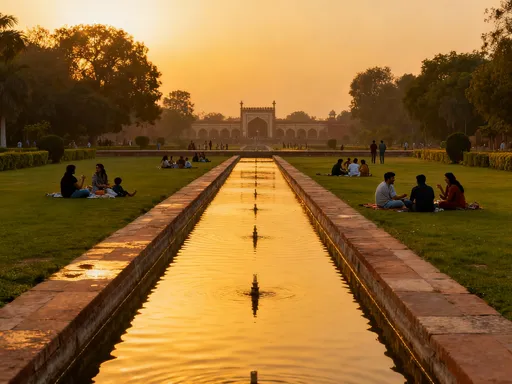
One of the most serene escapes in Lucknow is Amrapali Garden, a beautifully landscaped oasis that blends Mughal-inspired design with contemporary urban needs. Nestled in a residential neighborhood, this green haven offers a peaceful retreat from the city’s bustle. Wide, shaded pathways wind through manicured lawns, fragrant flowerbeds, and reflective water channels that echo the symmetry and elegance of traditional Nawabi gardens. Fountains add a gentle soundtrack, while benches placed under leafy canopies invite quiet contemplation.
What makes Amrapali Garden special is how it’s used by locals. Early mornings see yoga enthusiasts stretching on the grass, while families return in the late afternoon for leisurely walks. Children chase butterflies, elders sip tea from thermoses, and couples find quiet corners to talk. The garden is not a museum piece — it’s a living, breathing part of the community. Its design encourages movement and stillness in equal measure, making it ideal for both physical activity and mental refreshment.
Studies have consistently shown that access to green spaces improves mental health, reduces stress, and enhances overall well-being. Amrapali Garden exemplifies this principle in action. For city dwellers surrounded by concrete and noise, such spaces provide a vital counterbalance. The sensory experience — the rustle of leaves, the scent of jasmine, the dappled sunlight through trees — helps reset the nervous system and restore emotional equilibrium. It’s no surprise that regular visitors speak of the garden as a place of healing and renewal.
What’s also noteworthy is the garden’s inclusivity. Entry is free, maintenance is consistent, and the atmosphere is welcoming to people of all ages and backgrounds. There are no strict rules or enforced silence — just a shared understanding of respect for the space and one another. This democratic access to beauty and tranquility is rare in urban India, and it speaks to Lucknow’s quiet commitment to quality of life. For visitors, a walk through Amrapali Garden is not just a scenic diversion — it’s a lesson in how cities can nurture the human spirit through thoughtful design.
The Pulse of Hazratganj: Where Culture Meets Chill
If Amrapali Garden represents Lucknow’s quiet side, Hazratganj is its vibrant heartbeat. Once a colonial-era avenue, this tree-lined boulevard has transformed into one of the city’s most dynamic lifestyle corridors. What makes Hazratganj unique is its ability to balance commerce with calm. While it’s home to boutique stores, bookshops, and cafes, it doesn’t feel overwhelming or rushed. Wide sidewalks, shaded seating, and a growing emphasis on pedestrian access create an environment where shopping and relaxation coexist.
On any given afternoon, Hazratganj buzzes with gentle energy. Students browse secondhand books at roadside stalls, couples sip coffee at sidewalk tables, and artists display their work at occasional pop-up exhibitions. The area has become a cultural incubator, where creativity and community intersect. Local designers showcase handcrafted jewelry, poets read their work in open-air corners, and musicians sometimes perform impromptu sets. These small, organic expressions of culture give Hazratganj its soul — it’s not curated for tourists, but lived in by locals.
One of the most appealing aspects of Hazratganj is its invitation to linger. Unlike commercial districts in other Indian cities that prioritize speed and transaction, here there’s an unspoken permission to take your time. You can sit for an hour with a single cup of tea, watch the world go by, and feel no pressure to move on. This unhurried pace is a form of luxury in itself — a rare commodity in today’s fast-moving world.
For visitors, Hazratganj offers a window into Lucknow’s contemporary identity. It’s a place where tradition and modernity converse — where a woman in a saree sips a latte beside a student in jeans, where old-world courtesies meet new-age creativity. The area’s evolution reflects a broader shift in how Indians are redefining urban life — not by rejecting the past, but by weaving it into the present. A stroll through Hazratganj isn’t just a shopping trip; it’s a sensory immersion in a city learning to breathe.
Chai & Conversation at Local Tea Lounges
No exploration of Lucknow’s leisure culture is complete without diving into its thriving tea scene. Beyond the roadside chai wallahs — though they remain beloved — the city has seen a quiet rise in cozy tea lounges. These are not flashy cafes chasing trends, but intimate spaces designed for connection. With warm lighting, cushioned seating, and a menu that celebrates both masala chai and delicate green teas, these lounges have become sanctuaries for conversation and contemplation.
The ritual of tea in Lucknow is more than just a beverage choice — it’s a social anchor. People visit these lounges not to check emails or rush between meetings, but to talk, listen, and simply be together. Friends reunite after months, families celebrate small victories, and strangers strike up conversations over shared tables. The act of slowly sipping tea becomes a form of mindfulness, a way to ground oneself in the present moment.
One such lounge, tucked away on a side street near Aminabad, exemplifies this ethos. Its walls are lined with vintage Lucknowi poetry, and the air carries the scent of cardamom and fresh bread. Regulars are greeted by name, and the staff remembers how each customer takes their tea. There’s no Wi-Fi, no loud music — just the hum of conversation and the occasional clink of porcelain. In a world obsessed with speed and connectivity, this deliberate slowness feels revolutionary.
These tea lounges also serve as informal community centers. Students study between classes, writers draft stories, and elderly couples share memories over steaming cups. The absence of digital distractions fosters deeper human interaction, reminding us of the joy found in face-to-face connection. For visitors, sitting in one of these spaces offers a rare glimpse into the emotional rhythm of the city — not its monuments or markets, but its heart.
Evening Magic at Bara Imambara Grounds
As the sun begins to dip behind the arched façade of the Bara Imambara, the surrounding grounds undergo a transformation. By day, the monument draws history enthusiasts and curious travelers. But by evening, the vast lawns come alive as a social hub for the entire community. This is when Lucknow reveals one of its most beautiful traditions — the culture of the evening stroll, or sham ki savari.
Families arrive in clusters, spreading out on mats or folding chairs. Children fly colorful kites, their laughter echoing across the open space. Couples walk hand in hand along the perimeter, while groups of friends share snacks from nearby food carts. Vendors sell everything from sugarcane juice to roasted corn, their carts glowing under warm yellow lights. The atmosphere is festive yet peaceful, vibrant yet never chaotic.
What makes this experience so special is its inclusivity and safety. The area is well-lit, patrolled by friendly municipal staff, and welcoming to people of all ages and backgrounds. Women walk freely, elders sit without concern, and children play without restriction. In a country where public spaces are often gendered or unsafe, this is no small achievement. The Bara Imambara grounds offer a rare example of a truly shared urban commons — a place where everyone belongs.
For visitors, an evening here is not just a sightseeing opportunity — it’s an invitation to participate in local life. You can buy a kite and join the children, sip hot tea from a roadside stall, or simply sit and watch the city unwind. The monument itself, illuminated against the twilight sky, serves as a silent witness to centuries of community gathering. In that moment, history and present merge — not in a museum case, but in the living breath of the city.
Art, Poetry, and Quiet Joy at Bharat Kala Bhavan & Coffee Houses
For those seeking a more contemplative form of leisure, Lucknow offers quieter cultural corners — places where art, literature, and comfort converge. One such space is Bharat Kala Bhavan, a modest yet richly curated museum affiliated with a local university. Unlike large, overwhelming institutions, this gallery feels intimate, with carefully lit displays of regional art, calligraphy, and historical artifacts. The pacing allows for genuine engagement — you can spend ten minutes with a single painting and feel enriched.
Nearby, a cluster of small coffee houses has become a haven for students, artists, and thinkers. These are not chain outlets, but family-run spaces with mismatched chairs, handwritten menus, and walls covered in poetry and sketches. The coffee is simple, the Wi-Fi spotty, and the service slow — and that’s precisely the point. These cafes are designed for lingering, not productivity. You won’t find people typing furiously on laptops; instead, you’ll see friends debating philosophy, poets scribbling in notebooks, and solo visitors losing themselves in novels.
The combination of light culture and comfortable surroundings creates a unique form of downtime — one that nourishes both mind and soul. Visiting the museum and then settling into a nearby café offers a perfect rhythm: inspiration followed by reflection. It’s a reminder that leisure doesn’t have to be passive to be restful. Engaging with art or ideas in a relaxed setting can be deeply rejuvenating, especially when freed from the pressure to ‘achieve’ or ‘learn’.
These spaces also reflect a broader cultural value — the belief that intellectual and emotional well-being are intertwined. In Lucknow, culture isn’t confined to formal events or elite institutions; it spills into everyday life. Poetry is recited not just on stages, but in cafes. Art is not only displayed in galleries, but shared on napkins and walls. This democratization of creativity makes culture accessible, joyful, and deeply human. For visitors, participating in this ecosystem — even as a quiet observer — can be a profoundly grounding experience.
Why Lucknow’s Leisure Rhythm Works — And How to Make It Yours
What makes Lucknow’s approach to downtime so effective? It lies in the city’s commitment to accessible, low-pressure environments that invite lingering. Unlike destinations that rely on high-cost experiences or curated attractions, Lucknow’s magic is in its simplicity. Its parks, streets, and cafes are designed not for spectacle, but for use. They are spaces where people can be themselves — relaxed, unguarded, and present.
For travelers, embracing this rhythm requires a shift in mindset. It means letting go of itineraries that pack every hour with activity. It means allowing yourself to sit in a garden for no reason, to order one cup of tea and stay for two hours, to walk without a destination. The best times to experience Lucknow’s leisure culture are early morning and late afternoon, when the light is soft and the pace is gentle. Weekdays tend to be quieter, offering a more authentic glimpse into local life.
Transportation within the city is relatively straightforward. Auto-rickshaws are widely available and affordable, and ride-sharing apps operate reliably. Many of the best leisure spots — like Hazratganj, Amrapali Garden, and the Bara Imambara grounds — are within walking distance of each other in the central areas. For those staying longer, renting a bicycle can be a delightful way to explore at your own pace.
When visiting, a few simple etiquette guidelines enhance the experience. Dress modestly out of respect for local norms. Greet shopkeepers and staff with a polite ‘namaste’. Avoid loud conversations in quiet spaces. And most importantly, resist the urge to document every moment — sometimes, the deepest memories are the ones you don’t photograph. Lucknow rewards those who engage gently, who listen more than they speak, and who allow the city to reveal itself slowly.
Conclusion: Rediscovering Downtime in the Heart of Uttar Pradesh
Lucknow doesn’t shout its charms. It doesn’t need to. Its power lies in quiet moments — the steam rising from a clay cup of chai, the rustle of pages in a secondhand bookstall, the golden light falling across a centuries-old courtyard. This is a city that redefines leisure not through luxury or novelty, but through warmth, accessibility, and cultural continuity. It reminds us that the best experiences are often the simplest: a conversation, a walk, a moment of stillness.
In a world that glorifies busyness, Lucknow offers a different philosophy — one that values presence over productivity, connection over consumption, and being over doing. Its hidden spots are not secret because they’re hard to find, but because they’re easy to overlook in a culture that prioritizes the loud and the fast. Yet for those who slow down, they reveal a deeper truth: that joy often lives in the in-between moments, in the spaces we don’t plan for.
So the next time you seek a break, consider a city that doesn’t just entertain, but restores. Let Lucknow teach you how to rest with intention, to connect with strangers, and to find beauty in the ordinary. Because sometimes, the most transformative journeys aren’t across continents — they’re into the quiet magic of simply being.