Where Art Lives on Every Street Corner in Ljubljana
You know that feeling when a city just gets you? Ljubljana hit me like a quiet thunderclap—its streets humming with creativity, every corner whispering stories through color and form. I didn’t come for the galleries; I came for coffee. But what I found was something deeper: a city where commerce dances with art, where shopping windows become exhibits, and sidewalks turn into open-air studios. This isn’t just a capital—it’s a living canvas. And the heart of it all? Its vibrant commercial areas, pulsing with soul.
First Impressions: When a Capital Feels Like a Studio
Stepping into Ljubljana’s city center is like entering a carefully composed sketchbook where every line has intention. The immediate absence of traffic noise creates a rare urban stillness, allowing the senses to tune into subtler rhythms—the rustle of leaves along the Ljubljanica River, the soft chime of bicycle bells, the laughter of children chasing pigeons near Prešeren Square. This is a city designed for pedestrians, where wide promenades invite slow walking and open-eyed wandering. But beyond its walkability, what strikes visitors first is the seamless integration of art into everyday infrastructure. Sculptural railings curl like vines along staircases; benches are shaped like abstract waves; even sewer grates bear intricate patterns echoing Slovenian folk motifs.
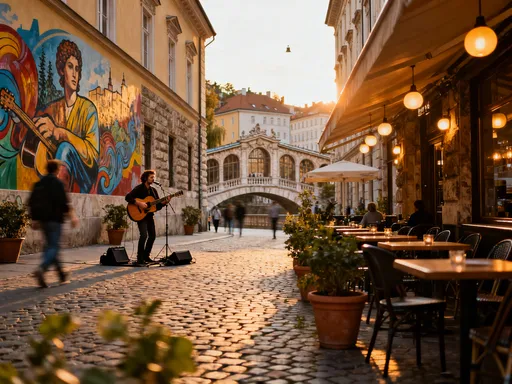
Art in Ljubljana does not wait behind velvet ropes. It announces itself in the way light filters through stained-glass canopies at market entrances, or how a whimsical bronze statue of a reclining reader appears unexpectedly on a quiet side street. Street performers—musicians, puppeteers, living statues draped in metallic paint—add motion to the scene, turning routine strolls into impromptu performances. Murals span entire building facades, some bold and colorful, others muted and poetic, each contributing to a visual dialogue across neighborhoods. The city doesn’t just display art; it breathes it, making the commercial district feel less like a shopping zone and more like an evolving exhibition space.
This artistic atmosphere isn’t accidental. It’s the result of decades of urban planning that prioritizes human experience over convenience. By restricting vehicle access to the historic core, Ljubljana has reclaimed public space for creativity and connection. As a result, shopfronts are no longer mere points of transaction—they become stages. A florist arranges bouquets as if composing still-life paintings. A bookstore displays titles in sculptural stacks, drawing eyes like gallery installations. Even mundane errands take on a quiet elegance, because beauty is not an afterthought here—it’s the foundation.
Plečnik’s Legacy: Design That Shapes Daily Life
No discussion of Ljubljana’s artistic character is complete without acknowledging Jože Plečnik, the visionary architect whose work quietly orchestrates daily life in the city. Though he passed away in 1957, his influence remains palpable in the way people move through space, interact with architecture, and experience the rhythm of urban living. Plečnik believed that design should serve both function and spirit, that even the most ordinary structures could carry dignity and grace. His philosophy transformed Ljubljana into a city where beauty is not reserved for monuments but woven into the fabric of routine.
Nowhere is this more evident than at the Triple Bridge, where three parallel walkways connect the old town with the bustling commercial district. Originally a single stone bridge, Plečnik expanded it in the 1930s by adding two flanking pedestrian lanes, crowned with elegant balustrades and lanterns. Today, it serves as both a major thoroughfare and a gathering place—a stage for chance encounters, street music, and evening strolls. The design encourages lingering, transforming a simple crossing into a social experience. It’s a masterclass in how infrastructure can foster community while elevating aesthetic pleasure.
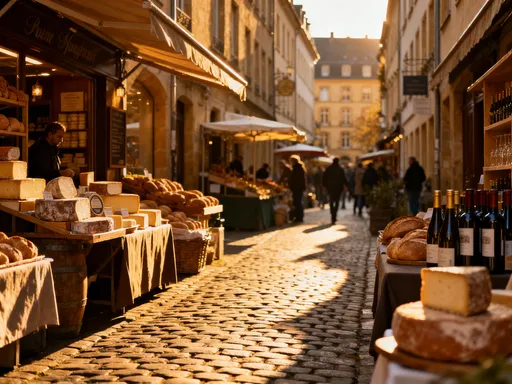
Equally impactful is his work on the Central Market, a riverside complex that blends utility with artistry. The market’s covered arcade features rhythmic columns and a sloping copper roof that glints in the sunlight. Inside, vendors sell fresh produce, honey, cheese, and handmade crafts, their stalls arranged with care and color coordination that feels almost curated. Plečnik didn’t just design a place to shop—he designed a place to see and be seen, where commerce unfolds within a carefully composed environment. His attention to detail extends to the river embankments, lined with stone steps that double as seating, inviting people to pause, reflect, and engage with the cityscape.
What makes Plečnik’s legacy so enduring is that his designs don’t shout for attention. They feel natural, intuitive, as if they’ve always belonged. Yet every element—the curve of a railing, the height of a lamppost, the spacing of columns—was deliberately chosen to harmonize with human scale and movement. In doing so, he set a precedent: that urban spaces should nurture both practical needs and emotional well-being. Modern Ljubljana honors this ethos by ensuring that new developments, even commercial ones, adhere to principles of balance, proportion, and contextual sensitivity.
The Central Market: Where Local Craft Meets Flavor
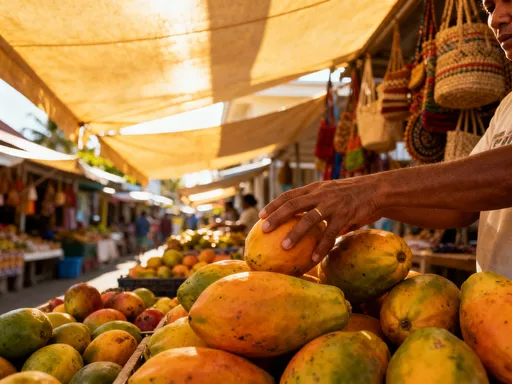
If Ljubljana is a living canvas, then the Central Market is one of its most vibrant brushstrokes. Stretching along the west bank of the Ljubljanica River, this bustling hub pulses with energy from early morning until mid-afternoon. Locals weave through the covered arcade, baskets in hand, stopping at stalls piled high with ruby-red strawberries, golden apricots, and bunches of wild herbs still dusted with earth. But this is no ordinary farmers’ market. Here, the presentation of goods is an art form in itself. Strawberries are arranged in concentric circles. Jars of honey are displayed like museum artifacts, each labeled with calligraphic precision. Even a simple loaf of bread becomes a sculptural object when nestled in woven baskets beside sprigs of lavender.
Beyond food, the market is a showcase for traditional craftsmanship. Artisans sell hand-knitted wool socks, embroidered table linens, beeswax candles, and wooden toys carved from local timber. These items aren’t mass-produced souvenirs; they’re expressions of cultural continuity, made by people who take pride in their materials and methods. A woman in a floral apron demonstrates how she spins wool using a foot-powered wheel, drawing small crowds who watch in quiet admiration. Nearby, a potter arranges ceramic bowls in gradients of sage green and terracotta, their surfaces textured with fingerprints and subtle glazes.
What makes the Central Market truly special is the rhythm of human interaction. Transactions here are rarely rushed. A customer might spend ten minutes discussing the origin of a particular cheese with the vendor, or ask for advice on which herbs pair best with duck. These exchanges aren’t just about buying and selling—they’re about sharing knowledge, building trust, and reinforcing community ties. The market operates as a living archive of local wisdom, where recipes, techniques, and stories are passed down as naturally as coins change hands.
Even the architecture enhances this sense of connection. Plečnik’s canopy provides shelter without enclosing, allowing light and air to flow freely. The open sides invite passersby to glance in, draw closer, and eventually step inside. During weekends, musicians often play folk tunes near the entrance, their melodies blending with the hum of conversation and the clink of glass jars. It’s a space that celebrates slowness in a world that often values speed, reminding visitors that shopping can be an act of presence, not just consumption.
Galerija Jakopič and Nearby Creative Hubs
While Ljubljana’s streets overflow with informal art, formal institutions also play a vital role in sustaining its creative ecosystem. Galerija Jakopič, nestled in a quiet corner of the city center, is one such anchor. Established in 1949, it remains one of Slovenia’s most respected contemporary art galleries, known for its experimental exhibitions and support of emerging artists. Unlike grand national museums, Galerija Jakopič feels intimate and accessible, its white-walled rooms just steps away from bustling cafés and boutique shops. This proximity is intentional—art here is not isolated but integrated into the daily flow of urban life.
What sets Galerija Jakopič apart is its commitment to dialogue between art and public space. Large windows facing the street allow passersby to glimpse current installations, blurring the boundary between gallery and sidewalk. Occasionally, works extend beyond the walls—sculptures placed on the plaza outside, or projections mapped onto adjacent buildings during festivals. These gestures invite accidental discovery, ensuring that art remains part of the city’s visual conversation even for those who don’t plan to visit a museum.
Just a short walk away, the streets around Congress Square and Slovenska Cesta host a network of smaller creative spaces that function as hybrid galleries, studios, and retail outlets. Independent boutiques specialize in slow fashion, featuring clothing made from organic fabrics and dyed with natural pigments. Their window displays resemble art installations—dresses suspended like mobiles, shoes arranged in geometric patterns, textiles draped to mimic flowing water. Some stores collaborate with local artists to rotate visual exhibits monthly, turning shopping into a form of cultural engagement.
These micro-hubs reflect a broader trend in Ljubljana: the rejection of rigid categories. A space can be commercial and cultural at once. A shop can sell goods while also curating beauty. This fluidity allows art to thrive outside traditional venues, reaching audiences who might never set foot in a formal gallery. It also supports local creators, giving them platforms to share their work without relying solely on grants or international exposure. In this way, the city’s commercial areas become incubators for creativity, sustaining a vibrant artistic community through everyday participation.
Urban Murals and Hidden Installations: Art Beyond Galleries
For those willing to wander beyond the main squares, Ljubljana reveals another layer of artistic expression—one that thrives in alleyways, underpasses, and forgotten corners. The city’s walls serve as an ever-changing canvas for muralists, stencil artists, and anonymous creators who use public space to communicate ideas, emotions, and humor. Unlike tourist-heavy destinations where street art is sanitized or commissioned, Ljubljana maintains a delicate balance between permission and spontaneity. Some murals are officially supported, part of city-sponsored programs to revitalize neighborhoods. Others appear overnight, ephemeral statements that may fade or be painted over, contributing to the city’s dynamic visual language.
One might turn a corner and find a giant octopus wrapping its tentacles around a café awning, its eyes twinkling with mischief. Another block might reveal a poignant black-and-white portrait of an elderly woman, her face etched with lines that tell stories of resilience. These works don’t come with plaques or explanations. They exist simply, asking only to be noticed. This culture of surprise encourages attentive walking—looking up, down, and sideways—transforming a simple errand into a treasure hunt for beauty.
Equally enchanting are the smaller, often overlooked installations embedded in the urban fabric. A tiny door appears at the base of an old tree, too small for any human but perfect for a fairy. A bronze cat peeks out from a wall niche, one paw raised as if mid-step. These whimsical details, many created by local artists or community groups, add layers of narrative to the cityscape. They invite imagination, especially in children, who often spot them before adults do.
What unites these dispersed artworks is their accessibility. They require no ticket, no schedule, no prior interest in art. They meet people where they are—on their way to work, returning from school, or walking a dog. In doing so, they democratize culture, ensuring that artistic inspiration isn’t limited to those who seek it out deliberately. For visitors, this means that every stroll through Ljubljana carries the potential for unexpected wonder, reinforcing the idea that art is not a luxury but a vital part of urban life.
Café Culture as Performance: The Aesthetics of Downtime
In Ljubljana, even moments of rest are carefully composed. The city’s café culture is not merely about coffee—it’s about atmosphere, design, and the art of lingering. Downtown cafés, many housed in historic buildings with high ceilings and large windows, are curated experiences in themselves. The choice of furniture—mid-century chairs, marble tables, wooden stools with woven seats—reflects a sensitivity to both comfort and visual harmony. Lighting is soft and warm, often provided by pendant lamps with fabric shades or vintage fixtures that cast gentle glows on tabletops.
Music, when present, is selected with intention. A jazz trio might play on weekends, their melodies floating through open doors. On quieter afternoons, a playlist of European chansons or acoustic folk tunes provides a subtle soundtrack. Even the baristas seem to move with rhythm, their gestures precise yet unhurried, as if performing a daily ritual. Ordering a coffee feels less like a transaction and more like stepping into a scene from a film—a moment suspended in time.
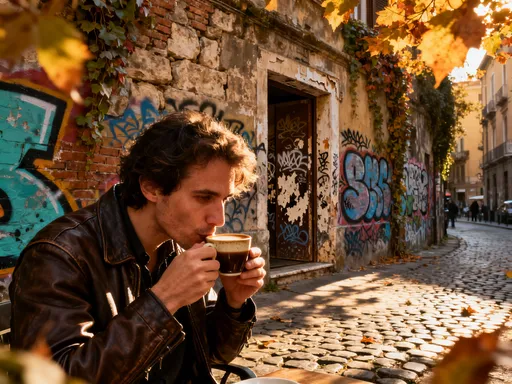
This attention to ambiance extends to outdoor seating, where planters overflow with geraniums and ivy, creating green oases amidst the stone and concrete. Patrons sit for hours with books, notebooks, or quiet conversation, undisturbed by the pressure to turnover tables. The city’s pedestrian-friendly layout ensures that cafés blend seamlessly with the street, their terraces becoming extensions of the public realm. In this way, the act of sitting down becomes part of the urban performance—observing, being observed, and participating in the city’s quiet theater.
For visitors, this café culture enhances the shopping experience by offering natural pauses—places to rest, reflect, and absorb what they’ve seen. A stop at a riverside café after browsing the market allows one to savor not just a pastry, but the memory of colorful stalls and friendly vendors. It’s a reminder that beauty is not only visual but experiential, shaped by pace, sound, and scent. In Ljubljana, even downtime is designed with care, ensuring that every moment contributes to a deeper sense of place.
Sustainable Style: How Ljubljana Balances Growth and Authenticity
One of the most remarkable aspects of Ljubljana’s artistic vitality is how it has flourished alongside responsible urban development. Unlike many European capitals that struggle with overcrowding and commercial homogenization, Ljubljana has managed to grow without losing its soul. This balance is no accident. Since 2007, when the city center was largely closed to private vehicles, a series of thoughtful policies have prioritized sustainability, livability, and community well-being. Electric buses glide silently along tree-lined avenues. Bike-sharing stations dot the streets, encouraging eco-friendly transit. Parks and green spaces are meticulously maintained, offering residents and visitors alike places to reconnect with nature.
These environmental efforts are deeply intertwined with the city’s cultural identity. Green roofs, solar panels, and energy-efficient buildings are not hidden but proudly displayed, treated as part of the city’s aesthetic vocabulary. Even commercial developments incorporate sustainable materials and biophilic design, using wood, stone, and living walls to soften urban edges. This commitment to ecology enhances, rather than diminishes, the artistic atmosphere—proving that beauty and responsibility can coexist.
Equally important are the social policies that prevent over-tourism and preserve local character. While Ljubljana welcomes visitors, it does so with limits. Short-term rentals are regulated to protect housing availability for residents. Public events are designed to include both tourists and locals, fostering mutual respect. Community-led initiatives, such as neighborhood clean-up days or artisan cooperatives, ensure that economic activity benefits those who call the city home.
This holistic approach reflects a deeper philosophy: that true artistry lies not in spectacle, but in stewardship. A city that cares for its people, its environment, and its heritage creates the conditions for authentic creativity to thrive. In Ljubljana, art is not a decoration applied to urban life—it is an expression of how that life is lived. Every mural, market stall, café, and bridge tells a story of intention, care, and continuity.
Ljubljana teaches us that art and commerce are not opposing forces, but partners in shaping a city that feels alive. When shopping becomes an encounter with beauty, when a walk turns into a gallery visit, when rest feels like participation—something profound happens. We begin to see consumption not as taking, but as connecting. The city invites us to travel with curiosity, to look closely, to notice the details others might miss. Because in Ljubljana, beauty isn’t hidden. It’s simply waiting to be seen.