You Gotta See These Hidden Photo Spots in Bora Bora’s Urban Heart
When you think of Bora Bora, you probably picture overwater bungalows and turquoise lagoons—same here. But during my trip, I stumbled upon something unexpected: vibrant urban corners buzzing with local life and Insta-worthy charm. Far from just beaches, the island’s small towns offer colorful streets, market life, and quiet moments where culture meets light. This isn’t just a paradise for romance—it’s a visual story waiting to be captured. Let me take you beyond the postcards.
Reimagining Bora Bora: Beyond the Postcard Views
Bora Bora has long been synonymous with luxury escapes and honeymoon fantasies. Travel brochures and social media feeds alike celebrate its shimmering lagoon, Mount Otemanu rising like a sentinel from the sea, and resorts that float on crystal-clear waters. Yet, for all its beauty, these curated images tell only half the story. The island’s true essence—its rhythm, warmth, and daily pulse—resides not in the five-star enclaves but in the modest streets of its towns, where life unfolds in real time. This shift in perspective invites travelers to look past the polished surfaces and discover a more grounded, human side of paradise.
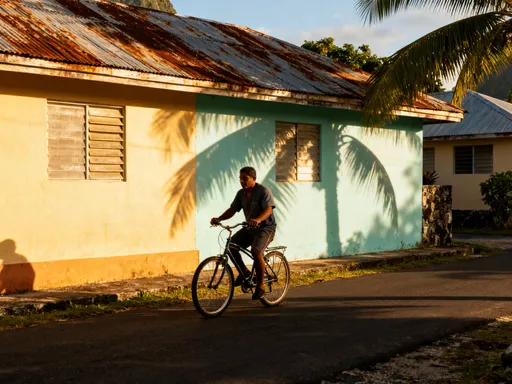
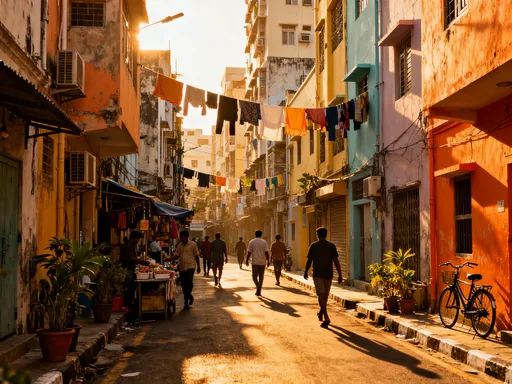
Vaitape, the island’s largest settlement, is a prime example of this overlooked reality. With no traffic lights and just a few paved roads, it might not resemble any city you’ve known. But it functions as the cultural and logistical hub of Bora Bora, where locals shop, socialize, and go about their daily routines. The buildings are modest—pastel-colored structures with corrugated metal roofs and open-air storefronts—but they pulse with authenticity. Here, you’ll find the post office, a handful of family-run grocery stores, a small bank, and the island’s main dock, where boats arrive and depart with a relaxed cadence.
For photographers, this means access to unfiltered moments: a woman arranging coconuts outside her stall, a group of teenagers laughing near a faded basketball hoop, or an elder sitting under a palm tree, weaving a fan from fronds. These scenes may lack the grandeur of a sunset over the reef, but they possess a quiet dignity that resonates long after the trip ends. The textures of weathered wood, peeling paint, and sun-bleached fabrics create visual depth that no studio backdrop can replicate. By turning the lens toward these everyday spaces, travelers gain not just images, but insight.
This kind of photography requires a change in mindset. Instead of chasing perfection, it embraces imperfection. It values presence over pose, authenticity over aesthetics. And while the lagoon will always be breathtaking, the moments found in Bora Bora’s urban heart offer something rarer: connection. They remind us that paradise isn’t just a view—it’s a way of life, lived one ordinary day at a time.
Vaitape: The Island’s Beating Heart and a Photographer’s Secret
If Bora Bora were a living organism, Vaitape would be its heartbeat. Nestled along the island’s western shore, this compact village serves as the central node for commerce, transportation, and community interaction. Though it spans less than a square mile, it teems with activity from sunrise to dusk. For visitors accustomed to the hushed luxury of resort islands, Vaitape offers a refreshing contrast—alive, unpolished, and deeply real. It is here, amid the modest storefronts and bustling docks, that some of the most compelling photographic opportunities on the island can be found.
The waterfront promenade is a natural starting point. Lined with brightly painted buildings in shades of coral, mint, and sunflower yellow, it creates a cheerful palette against the deep blue of the lagoon. Fishing boats bob gently at the dock, their wooden hulls worn smooth by salt and sun. In the early morning, fishermen unload their catch—silvery tuna, spiny lobster, and reef fish—laying them out on crates while seagulls circle overhead. The scene is both routine and cinematic, a perfect blend of labor and landscape.
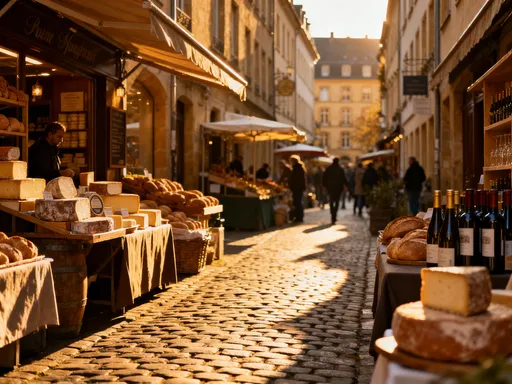
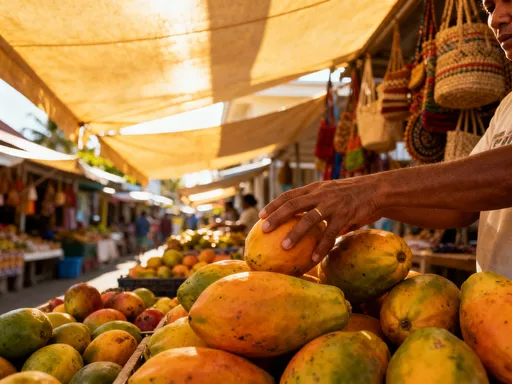
Nearby, the local market offers another layer of visual richness. Unlike the tourist-centric craft stands near the resorts, this is where residents come to buy fresh produce, handmade goods, and daily essentials. Stalls are covered with woven pandanus mats, and vendors display papayas, breadfruit, and taro with quiet pride. The colors are vivid—golden mangoes, deep purple eggplants, emerald limes—arranged in patterns that feel unintentionally artistic. Even the signage, often handwritten on cardboard or chipped wood, adds character to the scene.
Timing is crucial for capturing the best light and activity. The golden hours—just after sunrise and before sunset—transform Vaitape into a photographer’s dream. During these times, the low sun casts long shadows and bathes the buildings in warm, diffused light. Reflections shimmer on wet pavement after a brief rain, and the air carries a soft golden glow. It’s also when locals are most active: children walk home from school in crisp white uniforms, elders gather under shaded awnings, and shopkeepers sweep their门前steps with rhythmic precision.
Respectful observation is key. While the pace is slow and people are generally welcoming, it’s important to approach candid photography with sensitivity. A smile, a nod, or a simple greeting in Tahitian—such as 'Ia orana' (hello)—can go a long way in establishing goodwill. When photographing individuals, especially in intimate or working moments, it’s best to ask permission first. Many will agree, often with a quiet dignity, and some may even pose naturally, unaware of the beauty they embody.
Chasing Light: Urban Corners That Glow at Golden Hour
Light shapes everything in photography, and in Bora Bora’s urban spaces, it plays a transformative role. The midday sun, though bright, can be harsh—casting strong contrasts and washing out colors. But during golden hour, the island’s modest streets take on a magical quality. The low-angle sunlight softens edges, deepens hues, and turns ordinary corners into poetic compositions. It’s in these fleeting moments that the soul of the place reveals itself, not through grandeur, but through subtle detail.
One such spot is a narrow alley behind the main road in Vaitape, where two weathered buildings lean slightly toward each other, forming a natural corridor. In the late afternoon, sunlight slices through the gap, illuminating dust particles in the air and highlighting the texture of rusted metal sheets and faded murals. Palm fronds overhead create dappled patterns on the ground, shifting gently with the breeze. It’s a simple scene, yet rich with atmosphere—an urban vignette that feels both timeless and immediate.
Another standout location is the small public dock near the Catholic church. As the sun descends, its rays reflect off the water and onto the underside of the wooden planks, creating a warm underglow. Fishermen often linger here, repairing nets or chatting quietly, their silhouettes framed against the shimmering lagoon. The combination of human presence and natural light results in images that are both documentary and lyrical.
Even everyday objects come alive in this light. A rusted bicycle leaning against a wall, a row of plastic buckets lined up outside a home, or a child’s flip-flop left on a doorstep—all gain new meaning when bathed in golden warmth. These details, often overlooked, become symbols of daily life, each telling a small story. The key is to move slowly, observe closely, and let the light guide your eye.
Photographers should also pay attention to reflective surfaces. Puddles after rain, polished boat hulls, and even the chrome trim on vintage scooters can act as natural mirrors, adding depth and symmetry to compositions. Using a polarizing filter can help manage glare while enhancing color saturation, particularly in the blue tones of sky and water. And because the golden hour is brief, preparation is essential: pre-set exposure settings, keep lenses clean from salt spray, and carry a microfiber cloth to wipe down gear quickly.
Local Life as Art: Capturing Culture in Motion
Photography in Bora Bora’s towns is not just about places—it’s about people and the rhythms they create. The island’s culture is alive in motion: in the hands of a fisherman knotting a net, the stride of a schoolgirl in a pleated skirt, the careful arrangement of flowers at a roadside shrine. These moments are fleeting, yet they carry the weight of tradition, identity, and belonging. To capture them is to preserve not just an image, but a feeling.
One of the most powerful ways to document culture is through gesture. Watch how a vendor hands over a coconut with both hands—a sign of respect. Notice how elders sit with perfect posture, their presence commanding quiet reverence. Observe the way children play barefoot in the dirt, their laughter echoing off tin roofs. These gestures, small and natural, speak volumes about values, community, and way of life.
But ethical considerations must guide every shot. While it’s tempting to snap photos quickly, doing so can feel invasive. A better approach is to engage first, even if only briefly. A warm greeting, a shared laugh, or a moment of eye contact can build trust. Many locals appreciate genuine interest in their lives, especially when it’s expressed with humility. If you wish to photograph someone directly, a simple gesture—pointing to your camera and raising your eyebrows—often suffices as a request. Most will respond with a nod or a smile.
When permission isn’t possible—such as in candid street scenes—a zoom lens allows for respectful distance. A 70–200mm telephoto lens, for instance, enables you to capture authentic moments without intrusion. It also helps isolate subjects against busy backgrounds, drawing attention to facial expressions, hand movements, or the play of light on skin and fabric.
Equally important is avoiding stereotypes. Bora Bora is not a museum piece frozen in time. Its people wear modern clothes, use smartphones, and listen to international music. Representing them with dignity means showing them as they are—rooted in tradition, yet fully present in the modern world. A portrait of a young man in a floral shirt and baseball cap, texting under a banyan tree, is just as valid as one of an elder in traditional tapa cloth.
Finding Contrast: Tradition Meets Modernity in Small-Town Bora Bora
Bora Bora’s towns offer a quiet dialogue between old and new—a visual narrative of cultural continuity and change. Unlike the isolated luxury resorts, where time seems suspended, the villages reflect the evolving reality of island life. Here, tradition doesn’t vanish; it adapts. This coexistence creates compelling contrasts that enrich both the experience and the imagery of a visit.
One striking example is the sight of an ancient outrigger canoe tethered beside a brightly colored scooter. The canoe, carved from local wood and adorned with traditional designs, represents centuries of seafaring heritage. The scooter, likely imported from Asia, symbolizes modern convenience. Yet they exist side by side, not in conflict, but in harmony. Both are tools of movement, both serve the needs of the moment. Photographing them together creates a layered image—one that speaks of resilience, practicality, and identity.
Another contrast unfolds in sound and space. On Sunday mornings, the bells of the Catholic church ring out across Vaitape, calling the community to worship. Yet from an open window nearby, reggae music drifts into the air, its steady beat blending with the chime. This fusion of faith and rhythm reflects the island’s cultural blend—Polynesian roots, French influence, and global connections. Visually, it might appear as a woman in a floral dress walking to church while her son rides past on a skateboard, a Bluetooth speaker in his backpack.
Architecture tells a similar story. Some homes are built in the traditional Polynesian style, with raised wooden frames and thatched roofs. Others are concrete structures with satellite dishes and solar panels. The juxtaposition isn’t jarring—it’s organic, a sign of adaptation. Even religious sites blend elements: a small family chapel might feature stained glass alongside carvings of native motifs.
For photographers, these contrasts offer narrative depth. They invite viewers to look beyond the surface and consider how culture evolves without losing its core. A well-composed image can capture this balance—a grandmother weaving a basket while her granddaughter watches from a plastic chair, scrolling through a tablet. These moments don’t diminish tradition; they show it living, breathing, and passing forward.
Practical Tips for Urban Photography in a Remote Paradise
Shooting in Bora Bora’s towns presents unique challenges, even for experienced photographers. The tropical climate, limited infrastructure, and delicate environment require thoughtful preparation. Humidity, in particular, can wreak havoc on camera gear, causing lenses to fog and electronics to corrode. To protect equipment, it’s wise to store cameras in sealed plastic bags with silica gel packs when not in use. A rain cover or waterproof housing is also useful, as sudden downpours are common, especially in the afternoon.
Natural light is abundant, but managing it requires skill. In urban settings, shadows can be deep and unpredictable. Using a reflector or even a white piece of cardboard can help fill in dark areas, especially in portrait shots. Shooting in RAW format allows for greater flexibility in post-processing, enabling adjustments to exposure, white balance, and contrast without losing detail.
Lens choice matters in tight spaces. A 24–70mm f/2.8 zoom lens is ideal for street photography, offering versatility in framing and strong performance in low light. For tighter details—like a hand weaving or a pattern on a market mat—a macro lens can reveal textures often missed by the naked eye. A lightweight tripod or monopod may help in low-light situations, though discretion is key in public areas.
Packing light is essential. Bora Bora is accessible only by air and boat, and luggage space is limited. A mirrorless camera system offers high image quality with reduced weight. Bring extra batteries and memory cards, as charging opportunities may be sparse outside resorts. Solar chargers or portable power banks are practical additions.
Finally, respect is non-negotiable. Avoid photographing private homes without permission. Be mindful of sacred spaces, such as churches and family burial grounds. And always remember that the people of Bora Bora are not exhibits—they are hosts. Approach them with gratitude, and let your images reflect the dignity and warmth they extend to visitors.
Why These Moments Matter: The Power of Seeing Beyond the Resort
At its core, photography is an act of attention. When we raise a camera, we are saying, 'This matters. This is worth remembering.' In Bora Bora, choosing to photograph the urban heart—to focus on Vaitape’s streets, its people, its quiet corners—is a decision to see more deeply. It’s a rejection of the superficial and an embrace of the real. These images may not sell vacations, but they tell truer stories.
Travelers who venture beyond the resorts often return with more than souvenirs—they return with understanding. They’ve seen children walk to school barefoot, heard elders speak Tahitian with quiet pride, tasted fruit bought from a roadside stand. These experiences transform the island from a postcard into a place with depth, history, and humanity. And when captured with care, the photographs become heirlooms—windows into a culture, a moment, a connection.
There is also a quiet responsibility in this kind of photography. Every image shared online shapes perception. By highlighting the everyday life of Bora Bora, we challenge the narrow narrative of paradise as escape. We show that beauty exists not just in perfection, but in authenticity—in the rust on a gate, the wrinkle on a smile, the way light falls on a child’s face as he pedals home on a bicycle.
So the next time you visit Bora Bora, let your lens wander beyond the overwater bungalows. Walk the streets of Vaitape. Sit by the dock. Smile at a stranger. Let the island reveal itself not as a dream, but as a living, breathing world. Because the most unforgettable photos aren’t the ones that look like paradise—they’re the ones that help you feel it.