You Won’t Believe These Hidden Cultural Gems in Yokohama
Yokohama isn’t just Tokyo’s quieter neighbor—it’s a cultural playground waiting to be explored. From centuries-old temples to vibrant immigrant neighborhoods, the city blends tradition and modernity in ways you’d never expect. I was blown away by how much history hides behind its harbor skyline. If you're craving authentic experiences beyond the usual tourist spots, Yokohama delivers—big time.
The Soul of Yokohama: Where East Meets West
Yokohama’s identity is shaped by its role as Japan’s first international port, opening to global trade in 1859. This moment marked the beginning of a cultural exchange that continues to define the city’s character. Unlike other Japanese cities that preserved insular traditions, Yokohama embraced foreign influences with openness and curiosity. The result is a harmonious blend of Japanese customs and international elements that feel neither forced nor superficial, but deeply rooted in everyday life. Walking through the city, you sense a quiet confidence in its dual identity—one foot in tradition, the other stepping boldly into the world.
Districts like Yamashita Park stand as living monuments to this legacy. Once a docking point for foreign ships, the park now offers serene views of the harbor, dotted with monuments from sister cities around the globe. The scent of salt air mingles with the faint aroma of roasted chestnuts from nearby vendors, and children fly kites near the statue of Captain William Perry, whose arrival helped open Japan to the West. It’s not a place of grand spectacle, but one of quiet reflection, where history feels personal rather than distant. Nearby, the red brick warehouses—originally built for customs and storage—now house cafes, galleries, and boutiques, their architecture a testament to the Meiji-era fascination with European design.
What makes Yokohama’s East-meets-West narrative so compelling is its authenticity. This is not cultural tourism dressed up for show; it’s a lived reality. Generations of families have grown up in neighborhoods where Japanese and foreign traditions coexist—where New Year’s Day might include both temple visits and Christmas decorations still hanging in windows. Schools teach global awareness not as an abstract concept, but as part of daily life. This cultural duality isn’t just visible in architecture or cuisine—it’s embedded in the way people think, speak, and welcome visitors. For the thoughtful traveler, especially one who values depth over flash, Yokohama offers a rare opportunity to witness globalization done with grace and respect.
Chinatown Alive: More Than Just Food
When most people think of Yokohama Chinatown, they picture steaming baskets of dumplings and rows of souvenir shops selling lucky red envelopes. And yes, the food is exceptional—some of the best Chinese cuisine outside of China can be found here. But reducing Chinatown to its culinary offerings misses the heart of what makes it one of Asia’s most vibrant cultural enclaves. Spanning just a few blocks, this neighborhood is home to over 500 businesses, thousands of residents, and a community that has thrived since the 1850s. It’s not a tourist attraction pretending to be authentic; it’s authenticity in motion.
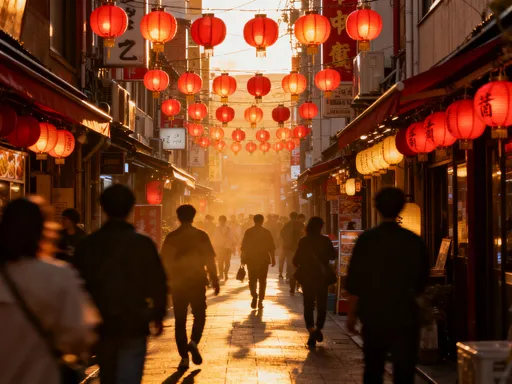
At the entrance gates, painted in bold red and gold, dragons coil around pillars while incense drifts from small shrines tucked between restaurants. These aren’t for show—they are actively used by locals who come to pray for health, prosperity, or safe journeys. The Yokohama Kantei Temple, dedicated to the god of literature and commerce, hosts quiet rituals every morning, with elderly residents lighting joss sticks and bowing in silent gratitude. During Chinese New Year, the entire district transforms into a festival of sound and color: lion dancers leap through the streets, drums pounding in rhythm, fireworks bursting overhead, and families gathering for ancestral meals. The air fills with the scent of soy sauce, roasting pork, and burning incense, creating a sensory experience that lingers long after you leave.
Yet even on ordinary days, Chinatown pulses with cultural energy. Calligraphy artists write names on fans in elegant brushstrokes, herbal medicine shops display roots and dried flowers in wooden drawers, and children learn traditional instruments in small music schools above shops. Local associations organize language classes, cooking workshops, and cultural exchanges with schools across the city. This is a community that values preservation—not as a museum piece, but as a living tradition passed from one generation to the next. For visitors, especially women traveling with family or seeking meaningful connections, Chinatown offers more than a meal; it offers a window into how culture sustains identity across time and distance.
Sankeien Garden: A Step Into Feudal Japan
Just a short bus ride from the bustling city center lies Sankeien, a tranquil oasis that transports visitors back to the elegance of the Edo period. Originally built in 1906 by Tomitaro Hara, a wealthy silk merchant known as Sankei, the garden was designed as a private retreat where art, nature, and hospitality could flourish. Unlike many modern parks, Sankeien is not a recreation of the past—it is the past, carefully preserved and lovingly maintained. Its ponds, teahouses, and walking paths follow classical Japanese garden principles, where every element—from the placement of stones to the curve of a bridge—carries symbolic meaning.
Seasons shape the rhythm of life in Sankeien. In spring, cherry blossoms frame the lotus pond in soft pinks and whites, their petals drifting like snow onto the water’s surface. By summer, hydrangeas bloom in clusters of blue and purple, while cattails rise from the marshlands. Autumn brings a fiery transformation: maple trees turn crimson and gold, their reflections shimmering in still pools. Even winter has its beauty, when bare branches trace delicate patterns against gray skies and frost dusts the stone lanterns. Each visit reveals a different face of the garden, encouraging repeat travelers to return throughout the year.
What elevates Sankeien beyond mere scenery is its role as a living cultural space. Traditional tea ceremonies are held regularly in the garden’s historic pavilions, led by trained practitioners who follow centuries-old rituals. Guests sit on tatami mats, observe precise movements, and sip matcha in silence, experiencing mindfulness long before it became a global trend. School groups come to learn about seasonal poetry, children sketch koi fish in notebooks, and elderly couples stroll hand in hand along gravel paths. The garden does not exist solely for tourists—it belongs to the people of Yokohama, a shared sanctuary where history breathes and tradition feels natural, not performative.
Cultural Crossroads: The Story of Motomachi and Yamate
Nestled on a gentle hill overlooking the harbor, the Yamate district—often called “The Bluff”—tells the story of Yokohama’s early cosmopolitan era. In the late 19th century, this area became home to foreign diplomats, merchants, and missionaries who built Western-style homes with gabled roofs, bay windows, and manicured lawns. Today, about a dozen of these historic residences remain, preserved as museums or cultural centers. Walking through Yamate feels like stepping into a different Japan—one where Victorian-era architecture meets Japanese garden aesthetics, and where the past is not hidden but celebrated.
Adjacent to Yamate is Motomachi, a charming shopping street that has evolved from a supply hub for foreign residents into one of Yokohama’s most stylish neighborhoods. Lined with boutique stores, patisseries, and flower shops, Motomachi reflects a refined taste shaped by decades of international influence. You’ll find handcrafted leather goods, imported teas, and locally made jewelry—all displayed in elegant shopfronts that honor simplicity and quality. Unlike crowded commercial districts in Tokyo, Motomachi moves at a gentler pace, inviting leisurely exploration. Women often gather here for afternoon tea, browsing books in quiet cafes or meeting friends beneath chestnut trees.
The connection between Yamate and Motomachi is more than geographic—it’s cultural. Together, they represent a long-standing appreciation for global ideas, adapted with Japanese sensibility. This isn’t imitation; it’s integration. A French bakery uses local yuzu in its tarts. A British-style tea room serves matcha scones. A clothing store blends Scandinavian minimalism with traditional indigo dyeing techniques. These subtle fusions reflect a worldview that values both heritage and innovation. For mature travelers, particularly those who appreciate history, design, and thoughtful living, this corner of Yokohama offers a refreshing alternative to the fast-paced consumerism found elsewhere.
Museums That Speak: Preserving Memory and Craft
Yokohama’s cultural richness extends into its museums, which range from world-class art institutions to interactive spaces celebrating everyday ingenuity. The Yokohama Museum of Art, located near the harbor, focuses on modern and contemporary works, with an emphasis on Japanese artists who engage with global themes. Its rotating exhibitions often explore identity, memory, and social change, presented in a way that is accessible without sacrificing depth. Natural light floods the galleries, and audio guides provide thoughtful commentary, making it a welcoming space for first-time visitors and seasoned art lovers alike.
Equally compelling is the CupNoodles Museum, a tribute to one of Japan’s most unexpected global exports. Founded by Momofuku Ando, the inventor of instant ramen, the museum tells the story of postwar innovation and perseverance. Interactive displays let guests design their own cup noodle labels, choose flavors, and even create a personalized recipe. But beyond the fun, the museum conveys a powerful message: creativity can emerge from necessity, and simple ideas can change the world. For families, this is more than entertainment—it’s inspiration.
What unites Yokohama’s museums is their commitment to storytelling with purpose. They don’t just display objects; they explain context, honor process, and invite participation. Whether it’s a centuries-old scroll or a plastic noodle fork, each item is treated with respect. This approach reflects a broader Japanese value: the dignity of craft, whether high art or humble invention. For adult travelers, especially women who appreciate narrative and meaning in their experiences, these institutions offer quiet moments of insight and connection.
Festivals That Define the City’s Rhythm
Throughout the year, Yokohama comes alive with festivals that blend celebration, tradition, and community spirit. The Yokohama Port Festival, held every summer, marks the city’s opening to international trade with parades, boat races, and fireworks over the bay. Locals line the waterfront, children wave miniature flags, and performance groups from sister cities add global flair. There’s a sense of pride in being part of a city that has always looked outward, yet remained deeply rooted in Japanese values.
Equally significant is the Kannai Matsuri, a fall festival that honors the city’s historical districts with traditional music, dance, and lantern processions. Government offices and businesses temporarily close, allowing employees to participate in the festivities. Residents dress in yukata, carry mikoshi (portable shrines), and chant in unison as they march through the streets. These events are not staged for tourists—they are expressions of local identity, passed down through generations. Participation is open to all, and visitors are often welcomed with warm smiles and simple instructions on how to join in.
Festivals in Yokohama do more than entertain; they reinforce continuity. In a rapidly changing world, they offer a sense of belonging and shared purpose. For women travelers, especially those interested in family traditions and cultural resilience, witnessing these events provides a deeper understanding of Japanese community life. You don’t just watch—you feel part of something enduring.
Off-the-Beaten-Path Encounters: Finding Authenticity
While Yokohama’s famous sites draw well-deserved attention, some of its most meaningful moments happen in quieter corners. In the Kōhoku neighborhood, small Shinto shrines nestle between homes, their torii gates half-hidden by trees. Locals stop to clap hands in prayer before heading to work or school, a daily ritual that speaks to the quiet presence of spirituality in ordinary life. These spaces are not polished for visitors—they are lived-in, weathered, real.
In Naka Ward, tucked behind modern buildings, you’ll find tiny ceramic studios where artisans handcraft tea bowls, vases, and plates using techniques passed down for decades. Some offer short workshops where guests can try their hand at the potter’s wheel or paint a small piece to take home. These experiences are intimate, unhurried, and deeply personal. There’s no pressure to buy—just an invitation to appreciate the care and patience behind each object.
For travelers seeking authenticity, the key is timing and mindfulness. Visiting early in the morning or on weekdays helps avoid crowds. Carrying a small notebook to sketch or write reflections enhances the experience. And observing local etiquette—removing shoes when required, speaking softly in sacred spaces, thanking hosts sincerely—opens doors to warmer interactions. Yokohama rewards those who travel with curiosity and respect, offering not just sights, but connections.
Yokohama proves that culture isn’t locked in the past—it thrives in streets, gardens, and shared meals. By choosing to explore its scenic spots with curiosity and respect, travelers don’t just see a city; they connect with its living heartbeat. This is what meaningful travel looks like.