How I Slashed Costs and Survived the Debt Crisis — An Honest Breakdown
I hit rock bottom when my debt started swallowing my income. Something had to change — fast. Instead of chasing quick fixes, I dug deep into real cost-cutting strategies that actually work. This isn’t about skipping coffee; it’s about smarter spending, tough choices, and financial clarity. If you're drowning in debt, this is how I clawed my way back — and how you can too. The journey wasn’t glamorous or fast, but it was honest, grounded in discipline, and built on decisions that prioritized long-term stability over short-term comfort. What began as a desperate attempt to stop the bleeding turned into a complete financial reset — one that restored not just my bank account, but my peace of mind.
Hitting the Wall: The Moment Debt Became Unmanageable
There was no single moment that shattered my financial illusion — just a slow erosion that eventually left me exposed. For years, I managed my bills on autopilot, making minimum payments while telling myself I’d get serious ‘next month.’ But next month never came. My income remained steady, but my expenses quietly climbed. Interest rates on credit cards, which I once ignored, began to compound at alarming speeds. What started as manageable balances turned into a mountain I could no longer climb. The truth hit me when I opened my monthly statement and realized the interest alone was nearly the cost of my grocery bill. That was the first time I felt genuine fear — not about running out of money, but about never catching up.
The psychological toll was just as heavy as the financial one. I stopped checking my balances regularly, not out of laziness, but out of dread. Every login felt like stepping on a scale after months of unhealthy habits — I already knew the number would be bad, but I couldn’t face it. Denial became my default. I told myself I wasn’t overspending; I was just living a normal life. But normal didn’t explain why I had no savings, why I relied on credit for car repairs, or why a single unexpected expense could throw me into panic. The reality was that I wasn’t living beyond my means — I was surviving within a flawed system that rewarded consumption and punished restraint.
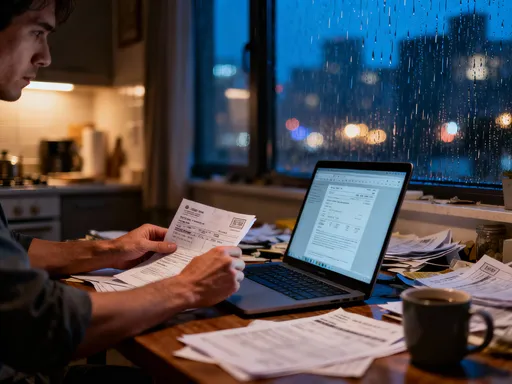
What finally changed was not a windfall or a sudden raise, but a quiet realization: no one was coming to fix this for me. Not my parents, not a miracle job, not a government program. The responsibility was mine alone. That moment of clarity wasn’t dramatic — it was almost mundane. I sat at my kitchen table, calculator in hand, and added up every debt, every monthly obligation, and every source of income. The number was worse than I thought. But for the first time, I wasn’t afraid. I was angry — at myself, yes, but also at the financial confusion that had made this feel inevitable. That anger became fuel. I decided then that I would no longer be passive. I would dissect my finances, cut what I could, and rebuild with intention. The climb out would be long, but I had taken the first step: admitting I was in debt — and that I had to get out.
Redefining Cost Reduction: Beyond Coupons and Cuts
When most people think of saving money, they imagine clipping coupons, packing lunches, or canceling streaming services. These actions have value, but they are surface-level solutions to a much deeper problem. I tried them all — and while I saved a few dollars here and there, the impact on my overall financial health was negligible. The real breakthrough came when I stopped focusing on small discretionary cuts and turned my attention to fixed, recurring expenses: housing, transportation, insurance, and utilities. These categories make up the majority of most household budgets, yet they are often accepted as unchangeable. I decided to challenge that assumption.
Housing was my biggest expense, consuming nearly 45% of my monthly income. I had always believed that moving was too disruptive and expensive, but I began to question whether staying was actually costing me more in the long run. After researching rental prices in nearby neighborhoods, I discovered I could downsize to a smaller apartment with lower rent and still maintain a safe, comfortable living environment. The move saved me over $300 per month — more than I had saved in a year from skipping takeout. It wasn’t about sacrifice; it was about optimization. I didn’t feel deprived — I felt empowered by redirecting that money toward my debt.
Transportation was the next frontier. I owned a car that was fully paid off, but the costs of insurance, maintenance, and fuel were silently draining my budget. I evaluated my driving habits and realized I only used the car for commuting and occasional errands. Public transit in my area was reliable, and I calculated that switching to a transit pass and using ride-sharing for occasional needs would save me nearly $200 a month. I sold the car, paid off a small remaining loan, and used the proceeds to boost my emergency fund. This wasn’t a trendy minimalist move — it was a financial decision rooted in data, not emotion.
Insurance was another area ripe for change. I had been with the same auto and renters insurance providers for years, renewing automatically without comparison. A quick online review revealed that I was paying 30% more than current market rates for the same coverage. By switching providers, I cut my annual premiums by over $500. I applied the same strategy to my cell phone plan, bundling services and negotiating a better rate, which saved another $40 a month. These weren’t flashy moves, but they were powerful. Each change required a few hours of research and a single phone call, but the cumulative effect was transformative. I began to see cost reduction not as deprivation, but as strategic realignment — a way to free up cash flow without sacrificing quality of life.
The Hidden Levers: Where Your Money Actually Goes
Most budgeting advice focuses on the obvious: groceries, dining out, entertainment. But the real leaks in a budget are often invisible — fees, auto-renewals, overlapping services, and poor timing. I spent weeks tracking every transaction, not just to see where I spent money, but to understand *how* I was losing it. What I found was startling. I had multiple subscriptions I no longer used — a fitness app I hadn’t opened in months, a cloud storage plan I shared with a service I’d already canceled, and a magazine subscription I inherited from a previous job. These weren’t large amounts individually, but together they totaled over $75 a month — money that disappeared without my awareness.
Bank fees were another silent drain. I wasn’t overdrawn, but I was hit with monthly maintenance fees, ATM charges, and foreign transaction costs from online purchases. By switching to a no-fee banking institution and using a debit card with built-in fee reimbursements, I eliminated nearly $30 in monthly charges. I also discovered that my credit card issuer offered a rewards program I had never activated. By using the card responsibly for fixed expenses — and paying it off in full each month — I began earning cash back that offset other costs. This wasn’t about gaming the system; it was about using available tools to my advantage.
Timing played a bigger role than I expected. I had multiple bills scheduled at different times of the month, which made cash flow unpredictable. Some weeks, I had three large payments due within five days, forcing me to shuffle money and sometimes incur late fees. I contacted service providers and requested to adjust billing cycles so they were spread evenly across the month. This simple change smoothed out my cash flow and reduced financial stress. I also discovered that many companies offer discounts for annual payments instead of monthly. By paying my internet and insurance bills annually — using a low-interest balance transfer — I saved over $200 in the first year alone.
Perhaps the most impactful change was in how I managed credit utilization. I learned that keeping balances too high, even if paid off monthly, could hurt my credit score and make future borrowing more expensive. I began making multiple payments per month to keep my utilization below 30%, which improved my score and qualified me for better interest rates. I also used balance transfers strategically — moving high-interest debt to a card with a 0% introductory rate — but only after reading the fine print and ensuring I could pay it off before the promotional period ended. These weren’t get-rich-quick tactics; they were disciplined, informed decisions that gave me control over money that was already mine.
Income Isn’t the Answer — Cash Flow Is
For a long time, I believed the solution to my financial problems was earning more. I read articles about side hustles, freelance gigs, and passive income streams. I even started a weekend job delivering groceries, hoping the extra $200 a month would make a difference. But after three months, I realized something troubling: my debt hadn’t decreased. In fact, my spending had increased slightly to match the extra income. I wasn’t saving more — I was just living at a slightly higher level while still falling behind. That’s when I understood a fundamental truth: more income without better cash flow management is like pouring water into a bucket with holes. The solution isn’t to pour faster — it’s to fix the leaks.
Cash flow stability became my new priority. Instead of chasing unpredictable side income, I focused on making my existing income stretch further and behave more predictably. I negotiated a slight raise at work by demonstrating consistent performance, but more importantly, I protected my job by avoiding unnecessary risks and maintaining a strong reputation. Job security, I realized, was more valuable than a temporary gig. I also worked to reduce variability in my expenses. By locking in fixed rates for utilities, internet, and insurance, I could forecast my monthly needs with greater accuracy. This predictability allowed me to plan debt payments with confidence, knowing I wouldn’t be blindsided by surprise costs.
I created a buffer — a small reserve of $1,000 — not to cover luxuries, but to absorb shocks. When my washing machine broke, I didn’t panic or charge the repair. I paid from the buffer and replenished it slowly over the next few months. This prevented a single emergency from derailing my progress. I also stopped viewing debt repayment as an all-or-nothing goal. Instead, I treated it like a fixed expense — non-negotiable, but manageable. By stabilizing my cash flow, I built the foundation for consistent progress. I wasn’t waiting for a windfall to save me. I was creating a system that worked even in ordinary conditions.
This shift in mindset was crucial. I stopped measuring success by how much I earned and started measuring it by how much I controlled. Financial health, I learned, isn’t about income level — it’s about predictability, discipline, and resilience. A stable cash flow doesn’t make you rich, but it gives you the power to make deliberate choices instead of reactive ones. That power is what ultimately freed me from the cycle of stress and survival.
Strategic Debt Management: Playing the Long Game
When I first started, I believed the fastest way out of debt was to pay as much as possible, as quickly as possible. I tried the avalanche method, throwing every extra dollar at my highest-interest card. But within months, I was exhausted. A family emergency drained my small buffer, and I fell behind. I felt like a failure — until I realized that financial strategy isn’t one-size-fits-all. Sometimes, paying the minimum isn’t surrender — it’s strategy. The key is understanding the true cost of each debt, not just the interest rate, but the impact of payment terms, penalties, and psychological burden.
I began to assess each debt individually. One credit card had a high interest rate but a small balance — paying it off quickly would free up mental space and build momentum. Another had a lower rate but a large balance — attacking it aggressively would take years and risk burnout. I decided to use the snowball method for the small balance, celebrating each payoff as a win. For the larger debt, I negotiated a lower interest rate by calling the issuer and explaining my situation. They agreed to reduce it by two percentage points, which saved me hundreds over time. I didn’t qualify for every program, but I learned that asking — politely and persistently — often yielded results.
Debt consolidation was another tool I considered carefully. I researched several options and chose a personal loan with a fixed rate and no origination fee. By consolidating three high-interest cards into one payment, I simplified my budget and reduced my monthly outflow. But I didn’t stop there. I closed the old accounts to avoid temptation and committed to using credit only for planned, budgeted expenses. I also avoided balance transfer cards with teaser rates that reset to high levels after a year — a trap that could have made my situation worse.
The most important lesson was timing. I stopped trying to eliminate all debt at once. Instead, I prioritized based on urgency, cost, and emotional weight. Some debts I paid aggressively; others I managed with minimum payments while I rebuilt my foundation. This wasn’t about giving up — it was about pacing. Financial recovery is a marathon, not a sprint. By playing the long game, I avoided burnout and maintained steady progress.
Building Guardrails: Systems That Prevent Relapse
Getting out of debt was hard — staying out was harder. I watched friends who had paid off balances only to fall back into spending within months. I didn’t want that to be me. So, I built systems to protect my progress. The first was automated spending caps. I set up alerts with my bank to notify me when I reached 80% of my monthly budget in certain categories. This wasn’t about restriction — it was about awareness. When I saw the alert, I paused, reviewed my spending, and adjusted if needed.
I also created a “debt defense” fund — a separate savings account dedicated to preventing future debt. It wasn’t large, but it grew slowly over time. When unexpected expenses arose, I used this fund instead of credit. I also adopted a 72-hour rule for any purchase over $100. I forced myself to wait three days before buying. Most of the time, the urge passed. When it didn’t, I bought with intention, not impulse. These weren’t rigid rules — they were safeguards that gave me freedom within boundaries.
I reviewed my finances monthly, not out of obsession, but out of respect. I tracked progress, adjusted budgets, and celebrated small wins. I also shared my goals with a trusted friend who held me accountable. This wasn’t about shame — it was about support. These systems didn’t eliminate temptation, but they made it easier to resist. They turned discipline into habit and habit into freedom.
The Mindset Shift: From Crisis to Control
The biggest transformation wasn’t in my bank account — it was in my mind. I stopped seeing money as a source of anxiety and started viewing it as a tool for stability and choice. I embraced patience, understanding that lasting change takes time. I celebrated small wins — a paid-off card, a month without new debt, a growing savings balance. I also accepted setbacks without letting them define me. When I overspent one month, I didn’t spiral. I adjusted, learned, and moved on.
I began to see financial health as a practice, not a destination. It required attention, honesty, and consistency. I stopped comparing myself to others and focused on my own progress. I found peace in simplicity, in knowing exactly where my money went and why. This wasn’t about deprivation — it was about clarity. I had traded the illusion of control for the reality of it.
This mindset shift made all the difference. I wasn’t just surviving — I was building a life that could withstand challenges. I had tools, systems, and resilience. Money no longer ruled me. I ruled my money.
Rebuilding Isn’t Quick — But It’s Possible
There’s no magic fix for a debt crisis. No app, no side hustle, no single trick can undo years of financial strain overnight. But with deliberate cost reduction, smart trade-offs, and emotional resilience, recovery is within reach. I didn’t get rich — I got free. I freed myself from the constant stress of owing, from the fear of the next bill, from the shame of hiding my finances. That freedom is worth more than any number in a bank account. If you’re in debt, know this: you are not alone, and you are not doomed. The path out is built one decision at a time — honest, intentional, and forward-moving. You don’t need perfection. You need persistence. And that’s something anyone can choose, starting today.